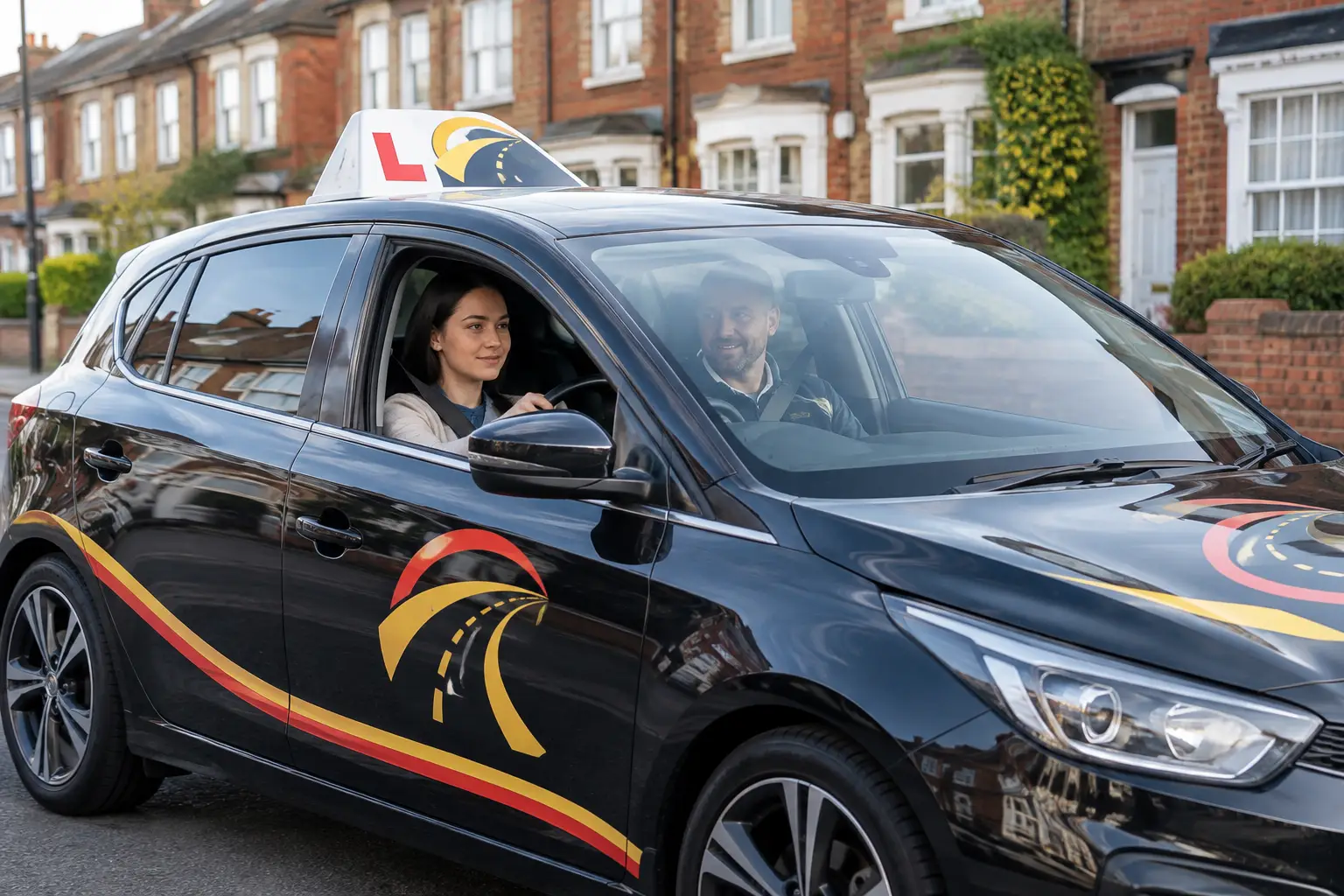
A learner who can manage the school run with a parent may still feel unsettled at a busy roundabout, while someone who has taken regular lessons may need more time simply getting used to making decisions without prompts. Private practice versus lessons is not really a choice between two competing routes. For most learners, the strongest progress comes from using each for what it does best.
Professional lessons provide structure, clear feedback and safe coaching. Private practice adds repetition, familiarity and extra time behind the wheel. The key is making sure those extra hours support good habits rather than quietly reinforcing mistakes.
What Professional Driving Lessons Bring
A qualified driving instructor does more than sit beside you and give directions. They assess what you can do independently, identify the reason behind a mistake, then plan the next stage of your learning. That structure matters, particularly when you are a complete beginner, a nervous driver or returning after a failed test.
Early lessons should build the foundations in the right order. This includes moving off and stopping safely, steering accurately, using mirrors effectively, understanding road position and developing good observation routines. In a manual car, you also need time to coordinate the clutch, gears and accelerator without losing awareness of the road. In an automatic, there may be fewer controls to manage, but the same standards of planning, judgement and safety still apply.
An instructor can also introduce new situations when you are ready rather than when they happen by chance. You may move from quiet roads to busier junctions, dual carriageways, complex roundabouts and independent driving in manageable steps. If something goes wrong, it becomes a coaching opportunity, not a reason to lose confidence.
This is especially useful for learners preparing around Greater Manchester test centres, where traffic conditions, road layouts and changing speed limits can demand calm decision-making. The aim is never to memorise routes. It is to read the road properly wherever you are driving.
Feedback Keeps Learning Honest
Private supervisors often want to help, but they may not spot every developing habit. Coasting towards a junction, braking late, missing a mirror check or approaching too quickly can become normal if nobody explains the impact. A professional instructor gives specific feedback: what happened, why it mattered and what to practise next time.
That makes lessons valuable even for learners who already have plenty of access to a family car. More hours are helpful, but only if the driving is being shaped in the right direction.
Where Private Practice Makes a Real Difference
Private practice gives you something lessons cannot always provide: frequent, lower-pressure repetition. After learning a new skill with an instructor, practising it again during the week can help it become more natural. You have time to settle into the car, build routine and make safe decisions without trying to absorb a new topic every minute.
It can be particularly helpful for everyday skills such as smooth pull-aways, gear changes, clutch control, parking in a safe location and following familiar directions. It also helps reduce the feeling that every drive is an assessment. The more safe, purposeful experience you gain, the more mental space you have for planning ahead.
Private practice is often useful before an intensive driving course too. A learner who already has a basic feel for the controls can use intensive sessions to focus more deeply on judgement, manoeuvres, test-standard driving and areas that need work. However, an intensive course is still demanding. It works best when there is a realistic starting point and enough time to process what you are learning.
The Legal and Practical Basics
Before practising privately, make sure the arrangement is legal and suitable. You must display L plates, and the supervising driver must be at least 21, have held the relevant full driving licence for at least three years and be legally entitled to supervise you. The car needs appropriate learner driver insurance, whether that is cover on the main policy or separate temporary cover.
The supervisor should be sober, alert and able to give calm guidance. A busy drive after a long day is not always the right time for a learner to take the wheel. Choose practice sessions when both of you have patience and when the route matches your current ability.
Private Practice Versus Lessons: The Trade-Offs
Lessons offer expert structure, but they are limited by the time you book. Private practice can add valuable mileage, but it can be inconsistent. One learner may be encouraged to develop independence; another may be told exactly when to brake or change gear, making it harder to think for themselves.
There is also a difference between driving around familiar streets and learning to deal with the unexpected. A regular route can build confidence, but confidence needs to be based on sound judgement, not just knowing what is around the next corner. Once your instructor agrees you are ready, vary the conditions. Drive at different times of day, in light rain where safe, on unfamiliar roads and through a mixture of residential, urban and faster roads.
Private practice should not become a second set of lessons with conflicting instructions. If your instructor is teaching a particular method for observations, positioning or manoeuvres, ask your supervisor to support that approach. Different people may use different wording, but the safety principles should remain consistent.
How to Combine Both Effectively
The most productive approach is simple: use lessons to learn and assess, then use private practice to reinforce. At the end of a lesson, ask for one or two clear practice priorities. For example, you might work on approaching junctions at the correct speed, checking mirrors before changing direction or improving the control needed for hill starts.
Keep each private drive focused. Instead of trying to cover everything at once, agree on a short route and a purpose before setting off. A 40-minute drive with a clear objective can be more useful than two hours of unfocused driving. Afterwards, briefly discuss what felt easier and what still needs attention. Avoid turning every mistake into a long conversation while the car is moving.
As you progress, add independent driving. Your supervisor can give you a destination or ask you to follow road signs, only stepping in when necessary. This develops the self-reliance required for the practical test and for driving after you pass.
When Lessons Should Lead the Way
There are times when private practice should take a back seat. If you are struggling with anxiety, repeatedly making the same serious fault, learning a new manoeuvre or preparing for a driving test after a previous fail, professional guidance should lead the plan. An instructor can decide whether the issue is control, observation, planning or confidence, then work on it safely.
Mock driving tests are another area where professional input is useful. They reveal how well you can drive without regular prompts and whether small errors are appearing under pressure. The result is not about judging you. It gives you an honest picture of what to improve before test day.
Do You Need Private Practice to Pass?
No. Many learners pass through regular professional lessons alone, particularly if they are consistent and have enough time to practise with their instructor. Equally, having lots of private practice does not automatically mean someone is ready for test standard. Readiness comes from safe, independent driving across a range of roads and situations.
The right balance depends on your experience, confidence, availability and learning style. Some people benefit from one lesson a week plus regular private drives. Others need a more structured programme, perhaps with longer or more frequent sessions, before private practice feels useful. Honest advice matters more than following a fixed formula.
At Clear Lane Driving Academy, the focus is on helping learners use their time purposefully, whether that means building confidence from the beginning, preparing for an intensive course or polishing skills before a practical test. Learn smart, drive safe and give yourself enough time to turn practice into genuine confidence.