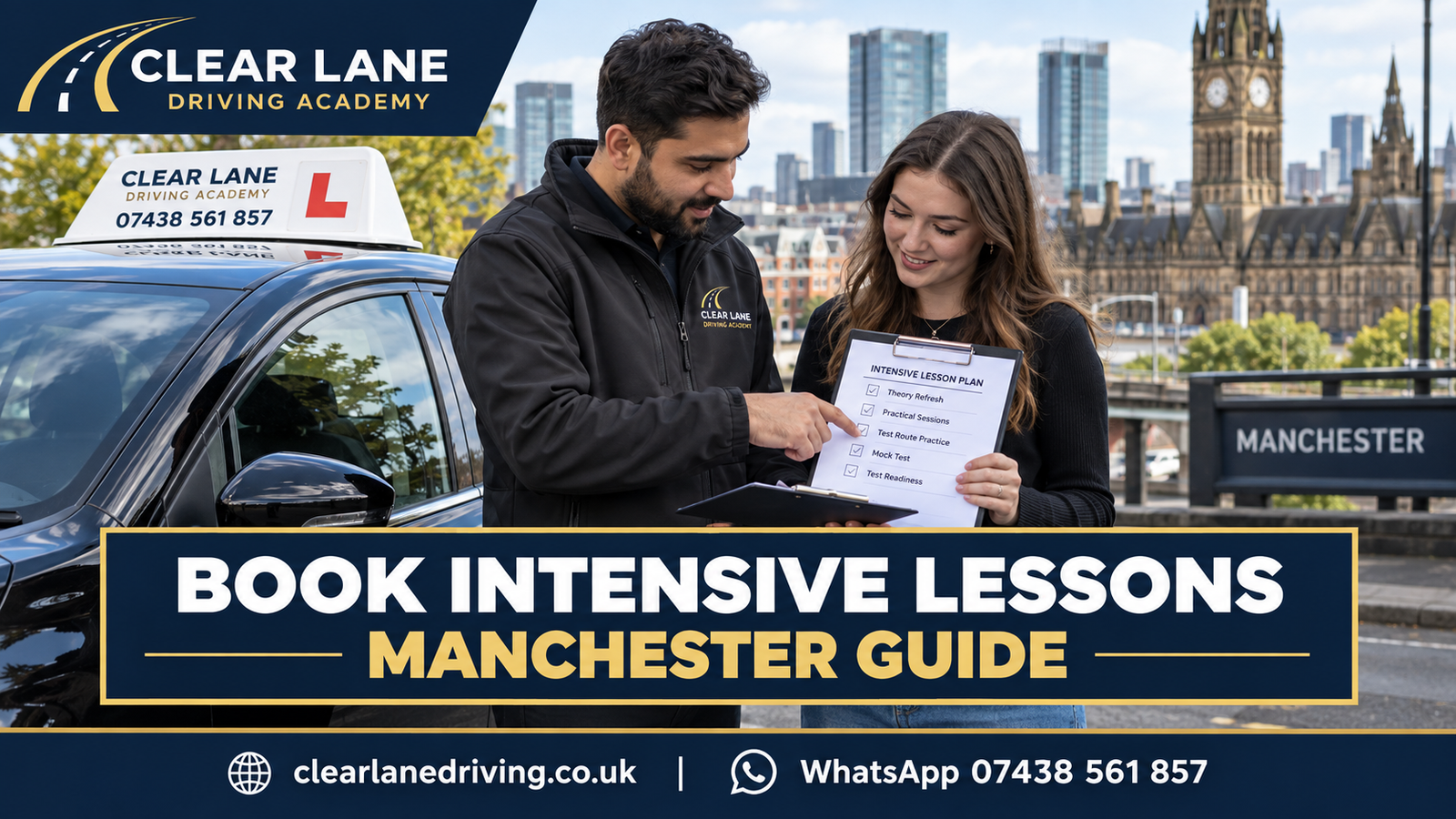
If you have a deadline, a practical test in mind or simply want to make steady progress without lessons stretching over months, learning how to book intensive driving lessons can make the process feel far more manageable. The key is not to cram in as many hours as possible. It is to choose a realistic course, give your instructor the right information and build enough time for safe, confident driving.
An intensive course can be a good fit for complete beginners, returning learners, people who have recently failed a test or learners who already have experience and need focused preparation. The right format depends on where you are starting, how quickly you learn and how much availability you genuinely have.
Start by being honest about your current level
Before booking, take stock of what you can already do behind the wheel. A learner who has never driven will need a different plan from someone who can drive independently but needs work on manoeuvres, roundabouts or test nerves.
Try to describe your experience clearly when you enquire. For example, explain whether you have driven in manual or automatic cars, when your last lesson was, whether you have passed your theory test and whether you have a practical test booked. This helps an instructor recommend a course length based on your needs rather than offering a one-size-fits-all answer.
Be especially open about confidence. Nervous drivers often make strong progress on intensive lessons when the course is planned at a calm, manageable pace. Equally, if you feel confident but have not driven for a while, a professional assessment can identify habits that may need attention before test day.
How to book intensive driving lessons step by step
Booking should feel clear from the first conversation. A reputable driving school will ask sensible questions, explain the available options and avoid promising a pass before they have seen your driving.
1. Check the practical details first
You will need a valid provisional driving licence before taking lessons on the road. If you plan to take your practical test during or shortly after the course, you must also have passed the theory test before the practical test can go ahead.
It is also worth checking your diary carefully. Intensive lessons work best when you can protect the time for them. Booking a course over one or two weeks while juggling unpredictable shifts, exams or family commitments can create unnecessary pressure. Some learners prefer a concentrated block; others benefit more from spreading the hours over several weeks.
2. Choose manual or automatic based on your needs
Manual lessons give you a manual licence if you pass, allowing you to drive both manual and automatic cars. Automatic lessons can remove the added task of clutch control and gear changes, which some learners find helps them focus sooner on road awareness, positioning and planning.
Neither route is automatically easier for every person. Your choice should reflect your confidence, the type of vehicle you expect to drive after passing and how quickly you need to progress. A calm discussion with an instructor can help you decide without pressure.
3. Ask for a course recommendation, not just a price
The most useful question is not simply how many hours are available. Ask what course length is likely to suit your experience and why. A school may suggest an initial assessment lesson, particularly if you have driven before or are unsure of your current standard.
Intensive courses are usually structured around longer lessons or several sessions close together. That gives you time to practise, reflect and repeat skills while they are fresh. But longer sessions can be mentally demanding, so a good plan includes breaks and adjusts if concentration drops.
When making your enquiry, have these details ready:
- Your postcode and preferred lesson area
- Whether you want manual or automatic lessons
- Your previous driving experience and any confidence concerns
- Your available dates and times
- Whether you have passed your theory test or already hold a practical test date
This information makes it easier to confirm instructor availability and build a course around a realistic timetable.
4. Understand what is included before you commit
Ask how the course is scheduled, how many hours are included and whether the practical test is part of the booking or arranged separately. It is also sensible to clarify the payment schedule, cancellation terms and what happens if an instructor assesses that you need more practice before your test.
That last point matters. Honest advice can be disappointing when you are keen to pass quickly, but taking a test before you can drive safely and consistently is rarely the best use of your time or money. The goal is to be ready for everyday independent driving, not only to get through the test route.
If you need a vehicle for your test, confirm test day car hire arrangements early. You should know whether the car is available, what preparation lesson may be recommended beforehand and how you will get to the test centre.
Plan around your practical test sensibly
A test date can shape an intensive course, but it should not dictate an unrealistic learning plan. Some learners book lessons first and arrange a test once their instructor believes they are approaching test standard. Others already have a test booked and need targeted support.
If you have a test date, share it immediately. Your instructor can look at the time available, assess your starting point and explain whether the course is likely to provide enough preparation. Passing depends on more than lesson hours. Sleep, practice between lessons where appropriate, confidence under pressure and familiarity with different road conditions all play a part.
For Manchester learners, local preparation can be particularly useful once the foundations are in place. Test centres such as Chadderton, Cheetham Hill, Rochdale, Sale, West Didsbury, Bredbury, Bolton, Atherton and Bury each involve different road layouts and common challenges. Good test preparation means learning to read the road safely, rather than trying to memorise every turn.
What a well-structured intensive course should feel like
A good intensive course has a clear direction. Early lessons should establish safe controls, observation routines and road position. As you progress, the focus should move towards meeting traffic, junctions, roundabouts, dual carriageways where suitable, independent driving and manoeuvres.
You should also expect regular feedback. Your instructor should explain what is improving, what still needs work and what you can do before the next lesson. For many learners, mock driving tests are useful near the end of the course because they reveal how well skills hold up when instructions are less frequent and nerves are higher.
Progress is rarely perfectly straight. You may have an excellent lesson followed by one where a busy junction or a new route unsettles you. That is normal. The value of intensive learning is that there is less time between sessions, so you can revisit the issue quickly with professional support.
Avoid booking based on urgency alone
It is understandable to want a quick solution when a new job, university plans or family responsibilities make driving feel urgent. Still, be cautious of any course presented as a fixed number of hours that will suit everyone. Learners develop at different rates, and safe driving needs more than repetition.
Look for clear communication, realistic expectations and an instructor who is willing to adapt the plan. Clear Lane Driving Academy takes this structured approach, helping learners across Greater Manchester build confidence alongside test readiness.
An intensive course is most effective when it gives you focus, not panic. Book the hours you can commit to, listen to honest feedback and treat every lesson as preparation for the journeys you will make after you pass. Learn smart. Drive safe. Pass with Clear Lane.