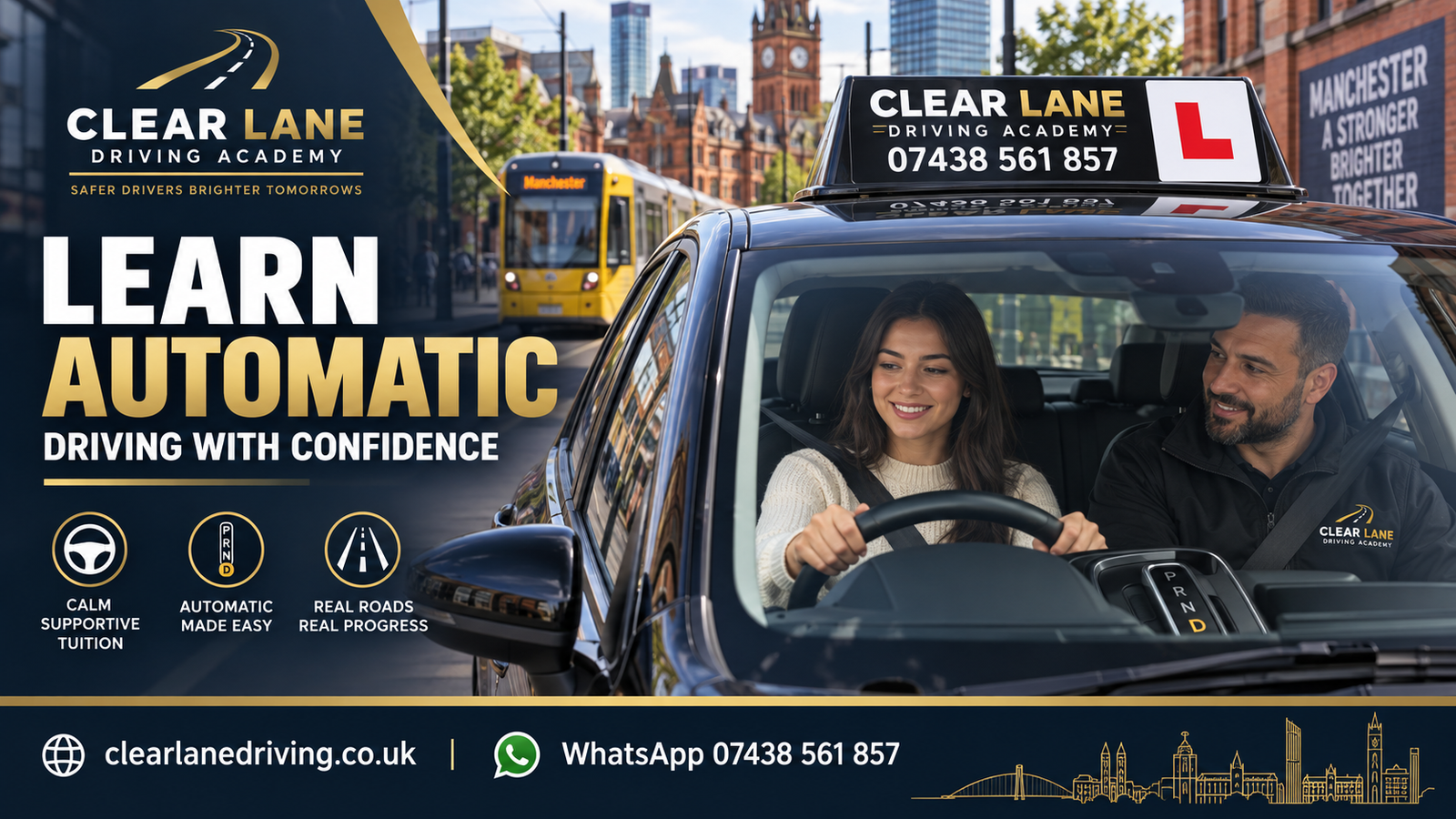
Sitting in the driver’s seat for the first time can feel like being asked to manage far too much at once. For many learners, the question is simple: can beginners learn automatic driving without feeling overwhelmed? Yes. Automatic driving is often a very sensible starting point, particularly for nervous learners, busy adults, or anyone who wants to focus their attention on the road rather than gears and clutch control.
An automatic car still requires concentration, sound judgement and safe habits. It simply removes one part of the early learning process. With calm, structured coaching, a complete beginner can build confidence steadily and develop the skills needed for everyday driving and the practical test.
Why automatic driving can suit complete beginners
In a manual car, learners must learn clutch control, selecting the correct gear, moving off smoothly, changing gear at the right time and avoiding stalls. These are useful skills, but they can take up a lot of mental space in the first few lessons.
An automatic car has no clutch pedal and does not require the driver to change gears manually. This allows many beginners to give more attention to steering, mirrors, road position, speed, junctions and other road users. At a busy Manchester roundabout or on a residential road with parked cars, having less to manage mechanically can make the situation feel more manageable.
That does not mean automatic driving is effortless. Learners still need to develop good observation, anticipation and decision-making. They must use the accelerator and brake smoothly, understand when to creep, plan ahead, and respond safely when traffic changes. The benefit is that these skills can become the main focus earlier in the learning process.
What beginners learn in automatic lessons
A well-planned automatic course starts with control and comfort, not pressure. Before moving into more complex traffic, a learner should understand the basic controls, seating position, mirrors, dashboard warnings and how to prepare the car safely.
Moving off and stopping with control
Early lessons often take place on quieter roads. You will practise selecting Drive, moving away smoothly, braking progressively and securing the car correctly when parked. Automatic cars can creep forward when Drive is selected and the brake is released, so learning careful brake control is particularly important.
The aim is not to rush through exercises. It is to make the basic actions feel calm and repeatable. Once moving off and stopping become more natural, you have more capacity for what is happening around you.
Building awareness from the start
Safe driving depends on seeing, planning and responding. Your instructor will help you develop routines for mirrors, signals, positioning and speed. You will learn to look well ahead, spot developing hazards and give yourself time to make decisions.
For example, approaching a junction is not just about turning the steering wheel. It involves checking mirrors, judging speed, choosing a safe position, observing pedestrians and cyclists, and deciding whether it is safe to proceed. Automatic lessons give beginners an opportunity to practise this sequence without adding a gear change at the same moment.
Handling real road situations
As confidence grows, lessons should move on to busier routes, traffic lights, roundabouts, dual carriageways where appropriate, and manoeuvres such as bay parking and parallel parking. Each skill is built on the last, rather than introduced as a test-day trick.
This structure matters for learners who feel anxious. Confidence tends to grow when you understand why you are doing something, have time to practise it, and can see clear progress from one lesson to the next.
Is automatic easier to pass in?
It depends on the learner. Some people find that removing gears and clutch control helps them progress more quickly because they can focus on the road earlier. This can be especially helpful if stalling, hill starts or coordinating several movements makes them tense.
However, an automatic test is assessed to the same safety standard as a manual test. You still need to drive independently, follow signs and sat-nav directions where asked, complete manoeuvres safely, and show good awareness throughout. There is no shortcut around the skills that make someone a safe driver.
The right question is usually not, “Which is easiest?” It is, “Which type of car will help me learn safely and confidently?” For someone who plans to drive an automatic car after passing, automatic lessons can be a practical and focused choice.
The licence point beginners should understand
Passing your practical test in an automatic car gives you an automatic-only driving licence. You can drive automatic vehicles, including many electric cars, but you cannot legally drive a manual car unless you later pass a practical test in one.
For some learners, that restriction is not a concern. Automatic vehicles are increasingly common, and an automatic licence may suit their future plans perfectly. For others, access to a family manual car, work requirements or a preference for wider vehicle choice may make manual lessons more suitable.
It is worth thinking about this before committing to a course. An honest instructor should talk through your needs rather than assume one option is right for everyone. If you are unsure, a first lesson can help you understand which route feels more comfortable.
How long does it take to learn automatic driving?
There is no fixed number of lessons that suits every beginner. Previous road experience, confidence, how regularly you practise, your availability and how quickly you retain new skills all make a difference. Some learners need extra time to feel settled with decision-making, while others develop confidence quickly but need refinement before the test.
Consistency is usually more valuable than trying to do everything at once. Regular lessons help you remember what you have practised and allow your instructor to build the next session around your progress. Intensive driving courses can also be useful for learners who have the time, can cope well with focused learning and need a structured route towards test readiness.
Fast progress should never mean cutting corners. A learner is ready for a practical test when they can drive safely and independently across a range of familiar and unfamiliar situations, not simply when they have completed a certain number of hours.
What nervous beginners can do before their first lesson
You do not need to study the Highway Code from cover to cover or know every control before you begin. Arrive rested where possible, wear comfortable shoes with a secure sole, and be open about any worries you have. A good instructor will adapt the pace of the lesson and explain what is happening before expecting you to do it.
It can also help to set small goals. Your first lesson might be about becoming comfortable in the car, moving off and stopping safely, rather than driving across town. Small successes matter because they replace uncertainty with experience.
If you have had an unsuccessful experience with another instructor or stopped lessons in the past, that does not mean you cannot learn. It may mean you need clearer structure, more time, or a different teaching approach. At Clear Lane Driving Academy, the focus is on calm coaching, honest feedback and helping each learner make progress at a pace that supports safe driving.
Signs that automatic lessons may be right for you
Automatic driving may be a good fit if you are a complete beginner who feels overloaded by the idea of gears, if you are returning to learning after a long break, or if you want to concentrate on road awareness from the outset. It may also suit learners planning to drive an automatic or electric car once they pass.
It is not only for nervous drivers. Many people choose automatic because it fits their lifestyle and the car they expect to own or use. The best choice is the one that gives you a realistic path to becoming a safe, confident and independent driver.
Your first lesson is not a judgement of whether you are naturally good at driving. It is the start of a skill that improves with patient practice, clear guidance and the confidence to take one safe step at a time.