Your first few lessons can feel like a lot: mirrors, steering, road signs, other traffic and finding the right position on the road. Add gears and a clutch into the mix, and it is understandable that many learners ask, “manual or automatic for beginners?” The right answer is not the same for everyone. It depends on how you learn, what you need driving to do for you, and how soon you want to be ready for your practical test.
At Clear Lane Driving Academy, honest advice comes before a one-size-fits-all recommendation. Both routes can produce safe, confident drivers. The best choice is the one that gives you enough mental space to build good habits and keep making progress.
Manual or automatic for beginners: the key difference
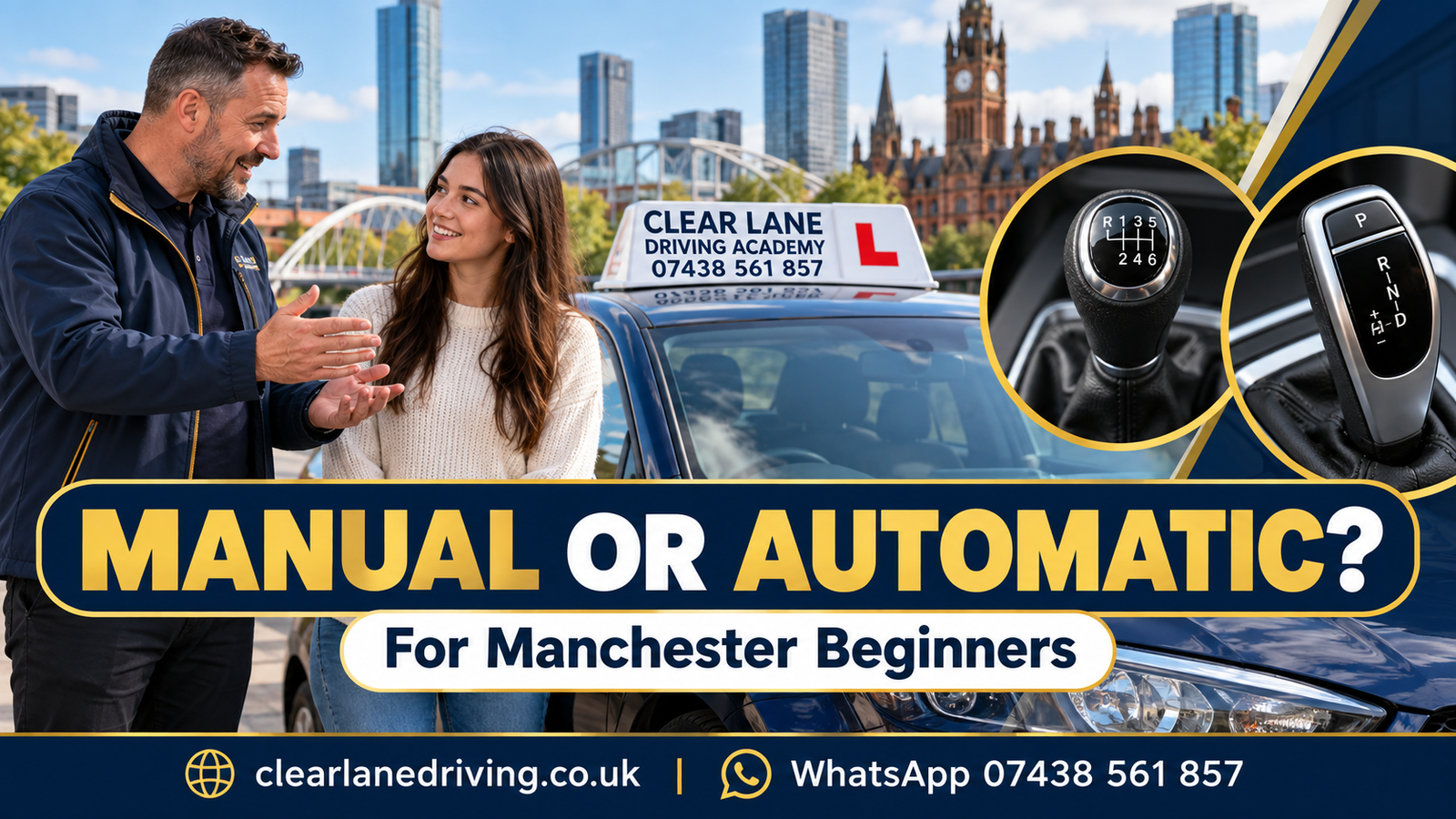
A manual car has a clutch pedal and gears that you select yourself. You need to coordinate your feet and hands when moving away, changing gear, slowing down and stopping. This takes practice, particularly at busy junctions, on hills and in stop-start traffic.
An automatic car has two pedals – accelerator and brake – and changes gear for you. That removes the need to find the biting point, avoid stalling or choose the correct gear. For many beginners, this means they can focus sooner on steering, observations, judgement and planning ahead.
Neither option removes the need to learn properly. You will still need to deal safely with roundabouts, pedestrians, cyclists, meeting traffic, parking and independent driving. Automatic lessons simplify the vehicle controls, but your instructor will still expect calm, accurate and safe decisions.
Why many beginners choose automatic lessons
Automatic driving can be a strong option if you feel nervous about coordinating several controls at once. A learner who spends every approach to a junction worrying about stalling may find it difficult to take in what is happening around them. With fewer physical tasks, some learners settle more quickly and build confidence earlier.
This can be particularly helpful for adults learning later in life, learners returning after an unsuccessful attempt to learn, or people who need a focused pathway towards their test. In Manchester, where lessons can include busy urban roads, frequent traffic lights and complex roundabouts, reducing the workload in the car can make early lessons feel more manageable.
Automatic may also suit someone taking an intensive driving course. Intensive learning requires concentration and consistency. If clutch control is likely to take up a large part of your early training, automatic lessons can allow more time for road awareness, manoeuvres and test-standard decision-making. That does not mean automatic is always quicker, but it can be the more efficient route for some people.
There is a practical future consideration too. Electric vehicles are automatic, and automatic cars are increasingly common. If you expect to drive an electric car or an automatic family car after passing, an automatic licence may meet your needs perfectly well.
The limitations of an automatic licence
Passing your test in an automatic car gives you an automatic-only licence. You can drive automatic vehicles, including electric cars, but you cannot legally drive a manual car unless you later pass a manual practical test.
That restriction matters if you may need to share a manual car with family, borrow a friend’s car, use a manual vehicle for work, or want the widest possible choice when buying a used car. It does not have to rule out automatic lessons, but it is worth thinking beyond test day.
Ask yourself what you are likely to drive in the next year or two, rather than choosing solely on what feels easiest in lesson one. If the only available car at home is manual, learning automatic could create an extra obstacle after you pass. If your likely car is automatic and you value a calmer learning process, the restriction may not be a concern.
Why a manual licence still appeals
A manual licence lets you drive both manual and automatic cars. That flexibility remains the main reason beginners choose manual lessons. You will have a broader range of vehicles available to you after passing, which can be useful when circumstances change.
Manual driving also gives you direct control over gear selection. Once the basics become natural, many drivers enjoy understanding how the car responds on different roads, hills and speeds. The early stages can be demanding, but a structured lesson plan breaks the skill down into manageable parts: moving off, stopping, clutch control, changing gears, then applying those skills in real traffic.
It is worth being realistic, though. Learning manual is not automatically better because it is more challenging. If the extra coordination causes ongoing anxiety or prevents you from developing safe observations and judgement, automatic could be the better choice for your confidence and progress.
Does manual take longer to learn than automatic?
Often, but not always. Manual learners need time to build clutch control and gear-changing into their routine. Some pick this up quickly; others need more repetition before they can manage the car without losing attention from the road.
Automatic learners can sometimes reach more complex driving situations sooner because the controls are simpler. However, the practical test standard is the same in both types of car. An automatic learner still needs consistent mirror checks, effective observations, correct positioning, safe speed choices and control at junctions.
The number of lessons you need will depend on more than the gearbox. Previous experience, lesson frequency, confidence, how much you practise, and how well you respond to coaching all make a difference. Be wary of anyone who treats a certain number of hours as a promise. Good training is structured around your progress, not a fixed timetable.
Choose based on your real driving life
The most useful decision usually comes from a few practical questions. What car will you have access to after passing? Do you need the widest possible licence options? Are you comfortable learning a new physical coordination skill? Is confidence currently your biggest barrier? Do you have a timescale for work, family commitments or a practical test?
If you have access to a manual car and want complete flexibility, manual may be the sensible long-term route. If you are feeling overwhelmed, want to concentrate on road awareness, or know you will drive an automatic or electric vehicle, automatic may give you the clearer path forward.
There is no prize for choosing the option that makes learning harder. The aim is to become a safe, independent driver who can handle everyday roads without relying on prompts or luck.
Can you switch from manual to automatic lessons?
Yes. Some learners begin manual lessons, then decide automatic better suits their learning style. Others start automatic and later choose to gain a manual licence once they are already comfortable with the wider demands of driving.
Before changing, talk openly with your instructor about what is holding you back. A difficult lesson or a few stalls does not necessarily mean manual is wrong for you. Early clutch control is meant to take practice. But if you have had consistent tuition and the vehicle controls are still stopping you from developing confidence on the road, switching may be a sensible, positive decision.
A calm instructor should help you assess this without pressure. The conversation should focus on your goals, your progress and the type of driving you expect to do after passing.
Make the most of whichever route you choose
Manual and automatic lessons work best when they follow a clear structure. At first, you should understand not only what to do, but why you are doing it. As your skills improve, lessons should gradually include busier roads, different junction types, manoeuvres, independent driving and realistic mock test practice.
If you are preparing for a test at centres such as Chadderton, Cheetham Hill or West Didsbury, local route preparation can be useful near the end of your course. It should never replace sound driving skills, but practising the kinds of roads, traffic patterns and decision-making you may meet can help you arrive better prepared.
Keep your focus on steady progress rather than comparing yourself with friends or family. A confident driver is not someone who never makes mistakes. It is someone who recognises them, responds safely and keeps learning.
Whether you choose manual or automatic, start with the option that helps you learn smart, drive safe and build confidence that lasts well beyond the day you pass.
If you are ready to get started, Clear Lane Driving Academy offers automatic driving lessons in Manchester and Oldham at the same price as manual. We also cover Bury, Failsworth, Ashton-under-Lyne and the wider Greater Manchester area — get in touch to book your first lesson.