Your practical test is not the day to get used to unfamiliar pedals, a different biting point or mirrors that have never been set for you. A useful driving test car hire review should look beyond whether a car is available. It should tell you whether the vehicle, preparation and support will help you arrive calm, legal and ready to drive safely.
For many learners, hiring the instructor’s car for test day is the sensible final step after structured lessons. It removes the uncertainty of borrowing a family car and gives you continuity with the vehicle you have practised in. But car hire is not right for everyone, and the details matter.
Why test-day car hire can make a difference
A practical driving test assesses how safely and independently you drive, not how quickly you adapt to a new car. Even a small change can take attention away from the road. The clutch may bite higher or lower, the steering may feel lighter, and the position of the controls may be different from what you expect.
Using the same tuition vehicle can reduce those avoidable distractions. You already know how it moves away on a hill, how responsive the brakes feel and where the demisters, wipers and lights are. That familiarity does not replace good driving, but it gives you more mental space to read the road, plan ahead and respond safely.
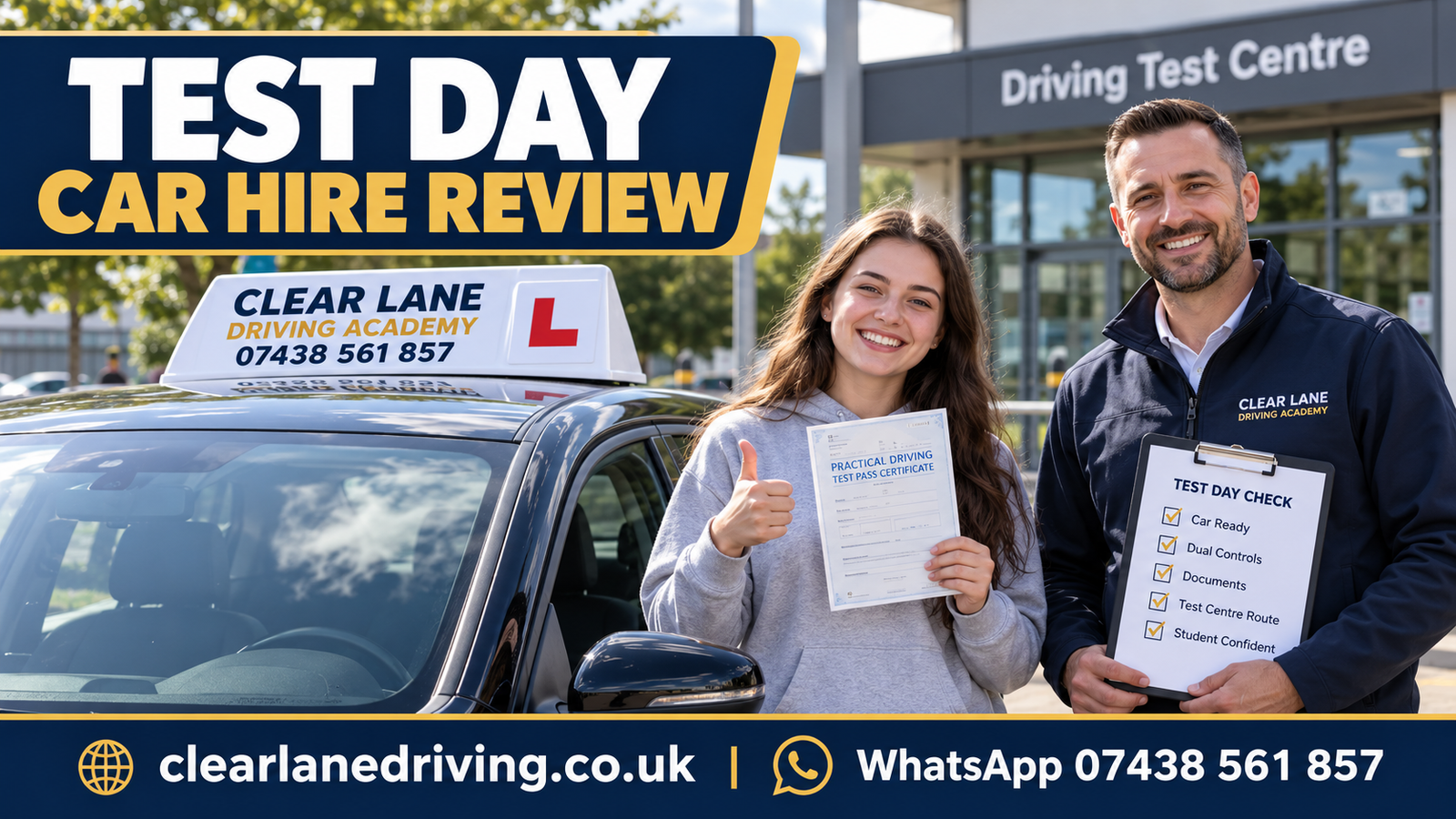
Test-day car hire also means the vehicle should be suitable for the test, properly maintained and fitted with dual controls where required for tuition. Your instructor can take you to the test centre, allow time for a warm-up drive and help the start of the day feel organised rather than rushed.
That said, hiring a car will not fix gaps in your driving. If you are still regularly missing mirrors, struggling with junctions or needing frequent prompts, honest feedback and further practice are more valuable than booking the car alone. The right time to hire is when you are test-ready and need consistent, professional support.
Driving test car hire review: what to check
When reading a driving test car hire review, look for clear information rather than broad claims. A reliable service should explain exactly what is included and what you need to do before the day.
Is the car the one you have learned in?
This is often the biggest benefit. Ask whether you will take your test in the same manual or automatic car used in your recent lessons. If the usual car is unavailable, find out as early as possible what replacement will be provided and arrange enough time to become comfortable with it.
A similar model may still feel different. In a manual car, pay particular attention to clutch control and finding the biting point. In an automatic, make sure you are comfortable with the brake sensitivity, gear selector and parking controls. A short drive immediately before the test is helpful, but it is not a substitute for proper familiarisation.
What does the booking include?
Test-day hire is often more than handing over a set of keys. It may include the car for your practical test, insurance for its use, collection or travel to the test centre, and a pre-test lesson or warm-up drive. However, arrangements vary, so do not assume.
Ask how much driving time is included before the appointment, whether travel time is part of the booking and what happens if the test is delayed. You should also understand the payment terms, cancellation policy and any conditions connected to using the vehicle. Clear answers are a good sign that the service is being managed professionally.
Is the car prepared properly?
A test vehicle needs to meet DVSA requirements. It must display L plates on the front and rear, be roadworthy, have valid MOT and tax where applicable, and be properly insured. It should not show warning lights or have issues that could make it unsuitable for the test.
Your instructor should check the car before the appointment, but it is reasonable for you to do a simple visual check too. Look at the tyres, lights and number plates, and make sure the windscreen is clear. Inside, adjust the seat, mirrors and steering position before moving off. These are normal driving responsibilities, not extra test-day pressure.
Will you receive calm, useful support?
The few minutes before a test can feel intense, especially after a previous fail or if you are a nervous driver. Good support is calm and practical. It means arriving with time to spare, having a focused warm-up drive and receiving straightforward reminders rather than a last-minute flood of instructions.
No instructor can influence the examiner’s decision, and no reputable school should suggest otherwise. What they can do is help you begin in the right frame of mind: settled, prepared and focused on safe driving one decision at a time.
When hiring a car may not be the best option
There are situations where using your own car makes sense. Perhaps you have practised consistently in a family vehicle, feel fully comfortable in it and can meet all legal requirements. You may prefer the familiarity of your own controls and the independence of arriving in your usual car.
However, check the practicalities carefully. Your car must be insured for the test, taxed and roadworthy, with L plates fitted. It should have a suitable passenger head restraint and no warning lights or defects that could prevent the test going ahead. You will also need someone appropriately insured to bring the car to the test centre if you cannot drive there alone.
Consider whether the car will genuinely feel familiar under pressure. A learner who mainly practises in an instructor’s dual-control car may find a family car more stressful on test day, even if they have driven it before. There is no universal answer. Choose the option that gives you the safest, most confident and most practised driving environment.
Preparing for car hire before your practical test
Do not leave the conversation until the evening before your test. Confirm the plan with your instructor in good time, including the meeting place, start time, test centre and whether you need to bring anything besides your provisional licence. Check that your driving test booking details are correct and that you understand the appointment time.
Use your final lessons to practise the parts of driving that need calm concentration: independent driving, meeting traffic, changing speed safely and handling the types of roads around your test centre. A mock driving test can be particularly useful because it shows how you manage decisions without regular coaching prompts.
On the day, aim for a normal routine. Wear comfortable footwear that allows you to feel the pedals properly. Avoid cramming new manoeuvres or watching hours of test advice immediately beforehand. A short, purposeful warm-up is usually more helpful than trying to correct everything at once.
If you make a mistake during that warm-up drive, do not treat it as a prediction of the test result. Notice it, reset and carry on. Safe drivers recover their focus.
Questions worth asking before you book
A clear conversation can prevent unnecessary stress. Ask whether the hire includes a pre-test drive, how long the car is reserved for, and whether you will use the same vehicle you have been learning in. Confirm the full cost and the policy for test cancellations, short-notice changes or a test that cannot go ahead because of severe weather or a vehicle issue.
It is also sensible to ask what happens if the instructor’s usual car develops an unexpected problem. A professional provider should have a clear approach, even though no one can guarantee that every circumstance will be avoidable.
For learners taking a test at Chadderton, Cheetham Hill, Rochdale, Sale, West Didsbury or another Greater Manchester test centre, local route preparation can add real value. The purpose is not to memorise routes. It is to become comfortable reading local road layouts, traffic patterns and speed changes while driving safely and independently.
Clear Lane Driving Academy approaches test-day car hire as part of a structured preparation plan, not as a standalone shortcut. The aim is to give test-ready learners a familiar vehicle, a calm final drive and honest guidance about whether they are ready to take the test.
A good test-day car should fade into the background. When the seat, controls and handling feel familiar, you can put your attention where it belongs: observing early, making safe decisions and showing the driving standard you have worked hard to build. Learn smart. Drive safe. Pass with Clear Lane.