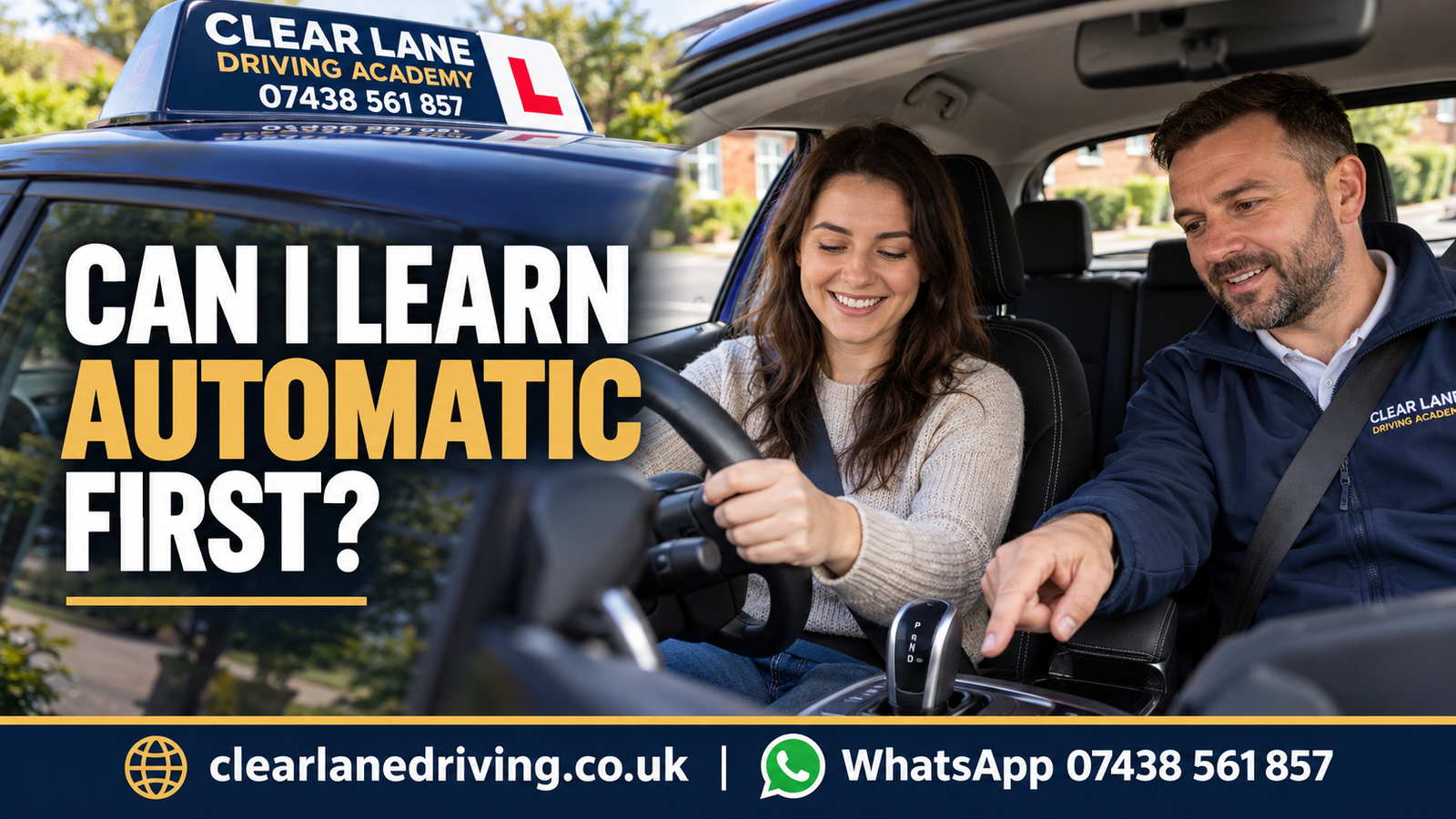
If you are asking, can I learn automatic first, the short answer is yes. You do not need to start in a manual car before moving to automatic. For many learners, especially nervous beginners or people who want a more straightforward start, learning in an automatic is a practical and sensible choice.
What matters most is not tradition. It is choosing the route that helps you become a safe, confident driver. Some people are better off learning manual from day one. Others make quicker progress in an automatic because they can focus on steering, planning, observation and decision-making without also managing clutch control and gear changes.
Can I learn automatic first and still be a good driver?
Absolutely. Learning automatic first does not make you a weaker driver. It simply changes what you learn in the early stages.
In an automatic car, you still need to judge speed, read road signs, deal with junctions, use mirrors properly, position the car well and respond calmly to other road users. You still need strong awareness and safe habits. The difference is that the car handles the gear changes for you.
That can be a real advantage when you are brand new to driving. Many learners feel overloaded in the first few lessons. They are trying to move off smoothly, avoid stalling, steer correctly, check mirrors and think about what is happening ahead, all at once. In an automatic, one major layer of complexity is removed. That often helps confidence grow faster.
Why some learners start with automatic
Automatic lessons are often a good fit for people who want a calmer introduction to driving. If you are an anxious learner, learning later in life, returning after a long break or trying to pass quickly for work or family reasons, automatic can feel more manageable.
It can also suit learners taking intensive courses. When your goal is steady progress in a shorter period, reducing the number of technical tasks can help you spend more time developing road skills. Instead of repeating clutch control at roundabouts or hill starts, you can focus on meeting situations, lane discipline, traffic flow and test-standard decision-making.
That said, easier does not mean effortless. Automatic learners still need proper structure, regular practice and honest feedback. Passing safely still depends on preparation, not just the type of gearbox.
The main drawback of learning automatic first
There is one key limit to be aware of. If you pass your practical test in an automatic car, your licence only allows you to drive automatics. You cannot then drive a manual car unless you take another practical test in a manual.
For some learners, that is not a problem at all. More drivers are choosing automatic cars, and electric vehicles are effectively automatic too. If you already know your future car is likely to be automatic, the restriction may make little difference.
But if you want the widest choice of vehicles, or if you expect to borrow family cars that are manual, it is worth thinking carefully. Some people choose manual because they want flexibility later, even if it takes a bit longer to learn.
Is automatic faster to learn?
Often, yes, but not always.
Many learners need fewer hours in an automatic because there are fewer mechanical skills to master. Moving off, stopping in traffic, dealing with hills and handling busy junctions usually feel simpler without a clutch and gear stick. This can speed up early progress and reduce the number of lessons spent correcting stalls or poor gear choices.
Still, driving is not only about vehicle control. A learner who struggles with confidence, concentration or reading the road may not pass quickly just because the car is automatic. The gearbox can remove one obstacle, but it does not replace experience.
A good instructor will be honest about this. Sometimes automatic is the better route because it helps the learner progress. Sometimes the real issue is lesson consistency, nerves or lack of practice between lessons.
Can I switch to manual later?
Yes, you can. If you learn automatic first and later decide you want a manual licence, you can take manual lessons and sit another practical test in a manual car.
For some people, this is a sensible two-stage approach. They first aim to become safe and test-ready in an automatic, then revisit manual later if they need it. That can take pressure off learners who feel stuck or overwhelmed.
There is a trade-off, though. Taking two routes can cost more overall because you may need extra lessons and another test. It makes sense if automatic helps you get on the road sooner, but it is not always the cheapest path.
Who should consider manual instead?
If you are comfortable with coordination, not especially nervous and want long-term flexibility, manual may still be the better starting point. It gives you the option to drive both manual and automatic cars once you pass.
Manual can also be worthwhile if the cars available in your household are manual or if your budget means you need the broadest second-hand car choice later. While the gap is narrowing, manual cars are still common.
The best decision depends on your priorities. If your main goal is confidence and a smoother learning experience, automatic may be ideal. If your main goal is flexibility, manual may be worth the extra challenge.
Can I learn automatic first if I am a nervous driver?
In many cases, yes, and it can be a very positive choice.
Nervous drivers often do better when lessons feel calm and achievable. Automatic cars reduce the fear of stalling, rolling back on hills or changing into the wrong gear. That does not remove nerves overnight, but it often frees up enough mental space for learners to build trust in themselves.
This is especially true on busier roads, multi-lane roundabouts and stop-start traffic. Instead of worrying about the clutch biting point, you can focus on what the road is asking you to do next.
What nervous drivers usually need most is not pressure. They need clear structure, patient coaching and lessons that build confidence step by step. The car type can help, but the teaching approach matters just as much.
Automatic first for intensive courses
If you are planning an intensive course, learning automatic first can be a smart option. Intensive driving works best when each lesson builds quickly on the last. Fewer technical distractions can make those hours more productive.
This can be useful for learners preparing for tests around busy Manchester routes, where traffic conditions change quickly and good observation matters more than showing you can manage a gear lever. On complex roundabouts or heavily used urban roads, many learners benefit from keeping things simple at first.
Still, intensive learning is not about rushing blindly. It works best when your course is matched to your current level, your confidence and how quickly you absorb feedback.
Questions to ask yourself before choosing
Before booking lessons, ask yourself what matters most. Do you need to pass as soon as realistically possible? Are you feeling anxious about learning? Will you be driving an automatic after you pass? Or do you want a licence that covers both types of car?
It also helps to think about how you learn best. Some learners like mastering the full mechanics from the start. Others do better when the process is simplified and structured. Neither approach is wrong.
If you are unsure, honest advice from a professional instructor can save time. A short conversation about your goals, confidence and previous experience often makes the choice much clearer.
So, can I learn automatic first?
Yes, you can, and for many learners it is the right decision. It can make early lessons feel calmer, help nervous drivers settle in and support faster progress when the goal is to become road-ready without unnecessary stress.
The key is to be clear about the trade-off. Passing in an automatic limits you to automatic cars unless you later take a manual test. If that fits your future plans, there is nothing second best about starting there.
Learn smart. Drive safe. Pass with Clear Lane. The best route is the one that helps you build real confidence, safe habits and steady progress from the very first lesson.
If you’re based in Oldham or Manchester, Clear Lane offers automatic driving lessons at the same price as manual — no hidden premium for choosing an automatic car.