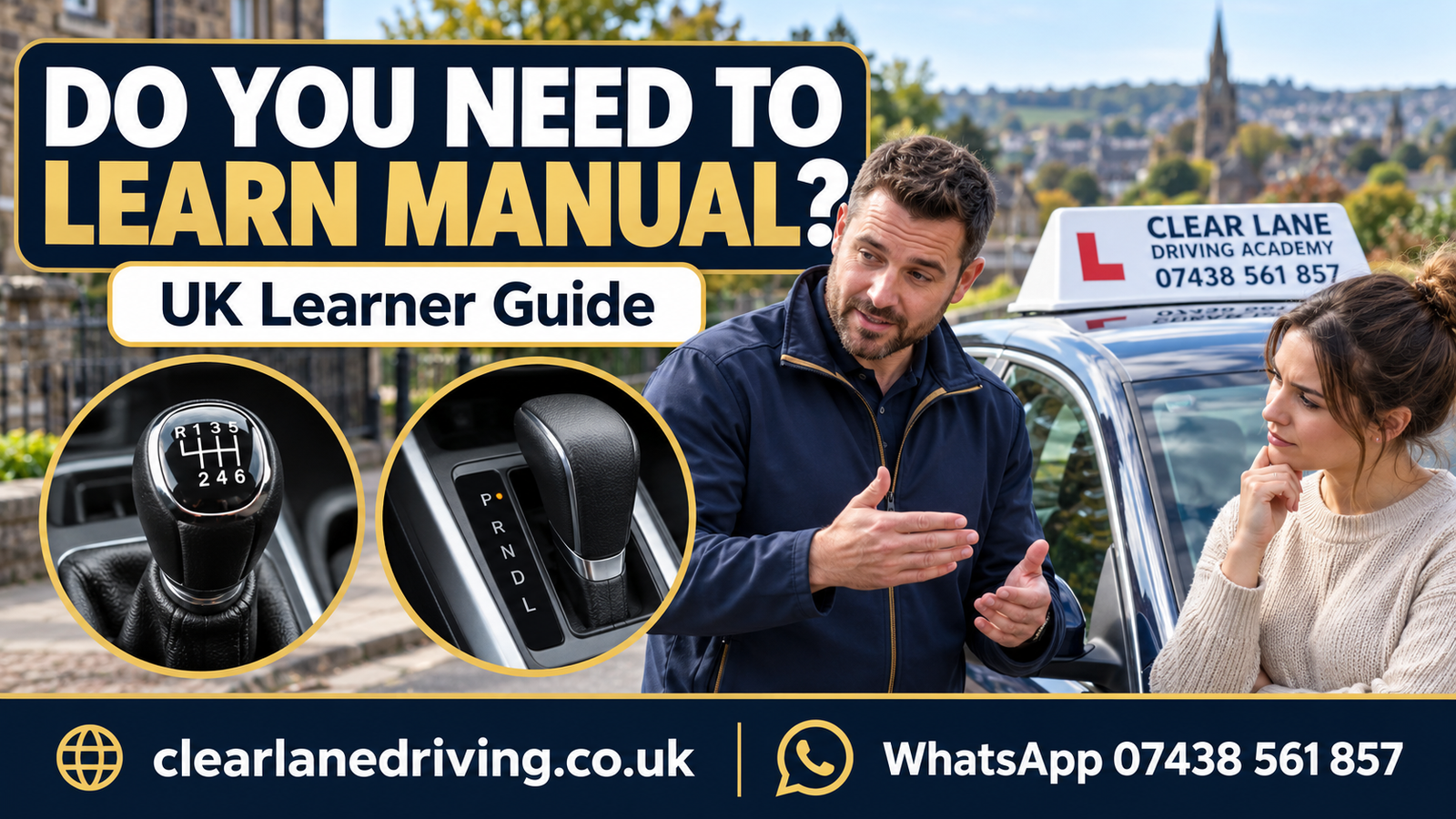
You are booking lessons, looking at test dates, and then the question lands – do you have to learn to drive in a manual car in the UK? The short answer is no. In the UK, you do not have to learn in a manual car. You can learn and take your driving test in either a manual or an automatic car. What matters is understanding how that choice affects your licence, your options afterwards, and how confident you feel while learning.
For many learners, this decision feels bigger than it needs to be. There is no single right answer for everyone. The best route depends on your budget, how quickly you want to pass, whether you are a nervous beginner, and what sort of driving you expect to do after you pass.
Do you have to learn to drive in a manual in the UK?
No, you do not. UK law allows learner drivers to learn in an automatic and take an automatic test, or learn in a manual and take a manual test.
The key difference is the type of licence you get at the end. If you pass your practical test in a manual car, you can legally drive both manual and automatic cars. If you pass in an automatic, your licence only covers automatic vehicles.
That one rule is the reason this question matters so much. It is not about which type of car is more respectable or more difficult. It is about what level of flexibility you want once you have passed.
How the licence rules work
A manual test gives you the broader licence. You will be tested on full car control, including clutch control, gear changes, moving off safely, hill starts and handling the car smoothly in different traffic conditions.
An automatic test removes the need to manage gears and clutch. You still have to drive safely, read the road well, use mirrors properly, judge speed, position correctly and respond calmly to hazards. In other words, automatic is simpler mechanically, but it is still a proper driving test with the same standards for safety and decision-making.
This is where some learners get caught out. They assume automatic means easy. In reality, automatic can reduce workload, but you still need strong observation, planning and control.
Why many learners still choose manual
Manual lessons remain a popular choice because they keep more doors open. If you pass in a manual, you can drive either type of car later. That can be useful if you borrow a family car, hire a vehicle, or buy your first car based on availability rather than preference.
For some learners, manual also makes financial sense over the long term. In parts of the used car market, there can still be more manual options available, especially at lower price points. That is changing as more automatic and hybrid vehicles appear on UK roads, but manual has not disappeared.
There is also the confidence factor. Some people like knowing they have learned the more technical option. Once they master clutch control and gears, everything else can feel more manageable.
The trade-off is that manual often takes longer to feel comfortable in. New drivers may stall, struggle with biting point control, or find busy junctions more stressful while they are still learning.
Why automatic may be the better choice
If your main goal is to pass safely and start driving sooner, automatic can be the better fit. Without gears and clutch to think about, many learners can focus more clearly on road awareness, planning and hazard response.
This can be especially helpful for nervous drivers, older learners, and people who have already had manual lessons but felt overloaded. Automatic often reduces that sense of having too many things to do at once.
It can also suit intensive learning well. If you are aiming to make fast, structured progress, removing gear changes can free up mental space and help you settle into driving routines more quickly.
That said, automatic is not automatically the fastest route for every learner. Progress still depends on lesson quality, consistency, private practice where appropriate, and how confident you become in real traffic.
Is manual harder to learn?
Usually, yes – at least in the early stages. Manual gives you more to coordinate. You have to manage clutch, gears, speed and braking together, particularly in stop-start traffic, at roundabouts and on hills.
For some learners, that challenge settles quite quickly with the right coaching. For others, it becomes a sticking point that slows everything else down. If the mechanics of the car keep distracting you from reading the road, your overall progress can suffer.
This is why honest advice matters. If you are making steady progress in a manual, it often makes sense to continue. If you have had plenty of lessons and still feel that gears are holding you back, switching to automatic may be the more practical decision.
Cost, time and real-world value
People often assume manual is always cheaper and automatic is always more expensive. In practice, it depends.
Manual lessons can sometimes be slightly more common and more available, which may help with scheduling. But if you need significantly more hours to become test-ready in a manual, the total cost may end up higher than learning in an automatic and passing sooner.
The real question is not just lesson price. It is total training time, your confidence level, and how quickly you can reach a safe test standard. A learner who needs 15 extra hours in a manual is not necessarily saving money compared with someone who learns well in an automatic.
There is also the car you plan to drive after passing. If your household already has an automatic, or you know you will be buying one, then a manual licence may be less important than it once was.
Who should consider learning manual?
Manual can be a sensible option if you want the widest licence choice, you are coping well with car control, and you do not mind spending a bit more time mastering the technical side of driving.
It may also suit learners who expect to share vehicles with family or need flexibility for work in the future. Even if you end up driving an automatic later, having a manual licence gives you more freedom.
If you are calm under pressure and enjoy learning practical skills step by step, manual often works well.
Who should consider learning automatic?
Automatic can be a strong choice if you want to reduce stress, build confidence faster and focus on safe road habits without the extra complexity of gears.
It is often a good fit for nervous beginners, learners who have struggled in manual before, and people on a tighter timeline who need a structured route to test standard. It can also suit city driving, where frequent stopping and starting makes manual less appealing.
For many Manchester learners dealing with busy junctions, roundabouts and heavy traffic, automatic can make those first stages feel more manageable.
Do employers or driving instructors prefer manual?
For standard car driving, most employers simply want you to hold the right full licence for the vehicle you will use. A manual licence is broader, but that does not mean an automatic licence is a poor choice.
A good instructor should not push you into one option for the wrong reasons. The best advice is based on your progress, your goals and your confidence behind the wheel. A calm, structured approach will always matter more than trying to force a route that does not suit you.
What if you start in manual and change your mind?
That is completely normal. Many learners begin with manual because they want the broader licence, then switch to automatic when they realise it is slowing their progress or affecting their confidence.
Changing route is not a failure. It is a practical decision. The aim is to become a safe, independent driver, not to make learning harder than it needs to be.
In fact, some learners benefit from trying manual first. They get a clear sense of whether it suits them. If it does, great. If not, switching early can save time and frustration.
So, which option is right for you?
If you want maximum flexibility and you are comfortable handling the extra coordination, manual is worth considering. If you want a simpler learning experience and a more direct path to passing, automatic may be the better option.
There is no shame in either route. The better choice is the one that helps you learn safely, build real confidence and stay in control under pressure.
At Clear Lane Driving Academy, that is the advice we come back to again and again – learn smart, drive safe, and choose the path that genuinely fits your needs.
If you are still unsure, think less about what other people say you should do and more about how you learn best. The licence matters, but so does the journey getting there. A calm, structured start usually leads to better driving in the long run.
If you’re based in Oldham or Manchester, Clear Lane offers automatic driving lessons at the same price as manual — no hidden premium for choosing an automatic car.